
Invited Speaker
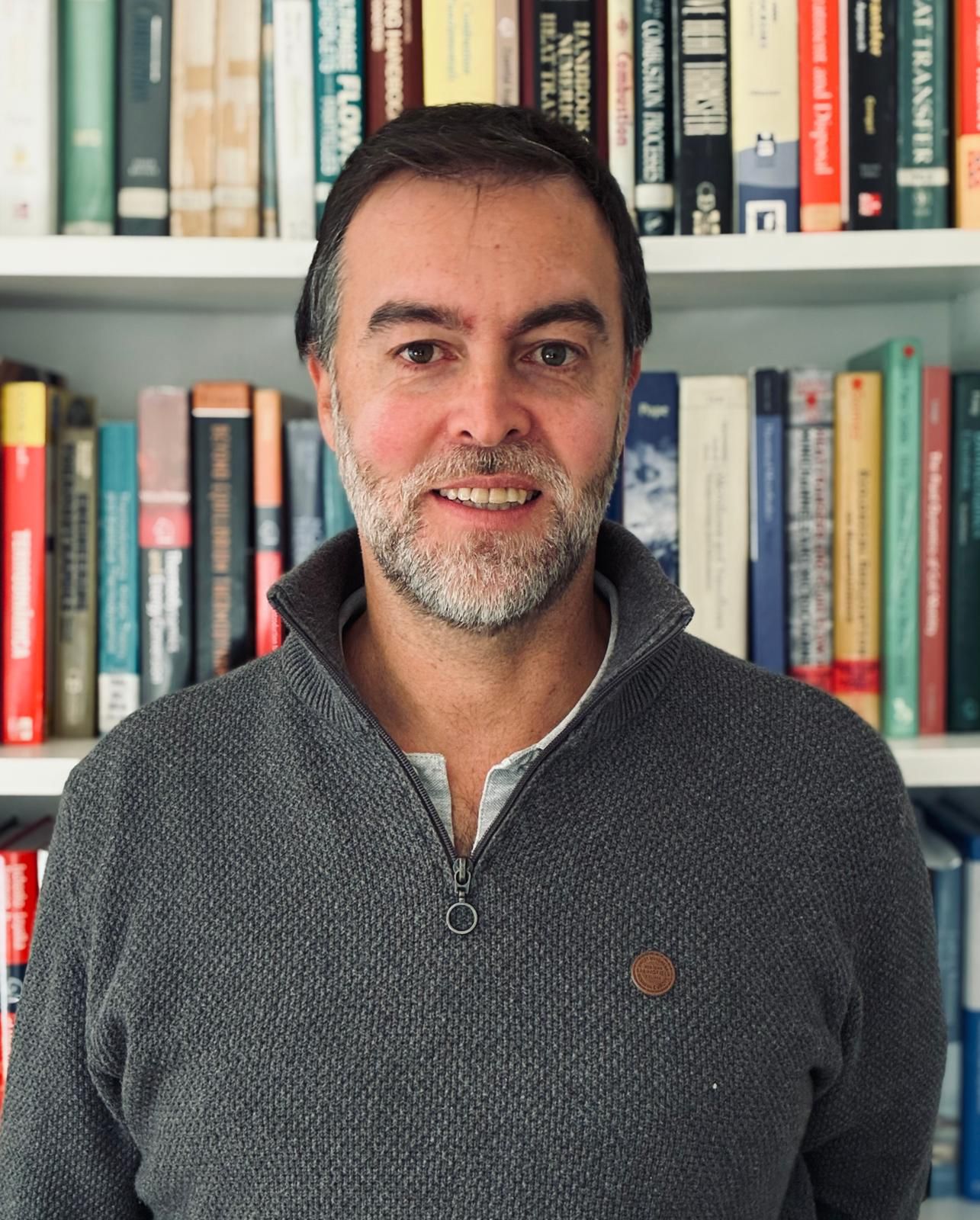
Gonçalo Silva
University of Évora, Portugal
Expert in CFD and lattice Boltzmann methods.
Gonçalo Silva
University of Évora, Portugal
Goncalo Silva graduated in Mechanical Engineering from Instituto Superior Técnico (University of Lisbon) in 2006 and completed his PhD at the same institution in 2013. He later conducted postdoctoral research at INRA in Paris, France, focusing on the lattice Boltzmann method in collaboration with Dr. Irina Ginzburg. He is currently an Assistant Professor in the Department of Mechatronics Engineering at the University of Évora, where he contributes to the development of the Aerospace Engineering area. His scientific interests are primarily in the field of computational fluid dynamics (CFD), with particular emphasis on the lattice Boltzmann method (LBM). He applies this method to the study of microfluidic and rarefied gas flows relevant to biomedical, energy and aerospace applications. He also investigates LBM from a fundamental perspective, focusing on the analysis of numerical consistency, accuracy, and stability, as well as the development of alternative bulk- and boundary-related models.

Alejandro Luis Garcia
San Jose State University & Berkeley Lab, USA
Expert in microscopic fluid dynamics, DSMC, and fluctuating hydrodynamics.
Alejandro Luis Garcia
San Jose State University & Berkeley Lab, USA
Alejandro Luis Garcia is an emeritus professor at San Jose State University and an affiliate of the Center for Computational Sciences and Engineering at Berkeley Lab. He received his Ph.D. in Physics from The University of Texas at Austin and conducted postdoctoral research at the Université Libre de Bruxelles and at the University of California, Los Angeles. Over the past 40 years, Prof. Garcia’s research has focused on theoretical and numerical formulations for modeling fluid dynamics in microscopic systems. He is best known for his work with Berni Alder, John B. Bell, and Aleksander Donev on Direct Simulation Monte Carlo (DSMC) and fluctuating hydrodynamics (FHD). Prof. Garcia is the author of the widely used textbook “Numerical Methods for Physics” and, more recently, the aide-mémoire “Essentials of Modern Thermodynamics”. In addition to his academic career, he has served as a physics consultant for several companies and studios, including Nike, Electronic Arts, Pixar, and DreamWorks Animation, receiving screen credits on multiple feature animated films.
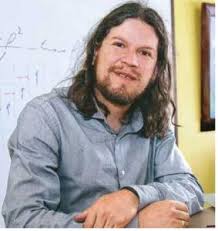
José Daniel Muñoz Castaño
National University of Colombia, Colombia
Expert in statistical physics, complex systems, and lattice Boltzmann methods.
José Daniel Muñoz Castaño
National University of Colombia, Colombia
Prof. José Daniel Muñoz Castaño is a researcher and professor internationally recognized for his contributions to statistical physics, computational modeling, and lattice Boltzmann methods applied to complex systems. He is affiliated with the National University of Colombia and has also collaborated with the Friedrich-Alexander-Universität Erlangen-Nürnberg through research activities in multiscale simulation and computational physics. His research interests span a broad range of interdisciplinary topics, including statistical mechanics, granular matter, fracture dynamics, complex fluids, transport phenomena, molecular dynamics, and mesoscale numerical methods. Prof. Muñoz Castaño has made important contributions to the development and application of lattice Boltzmann techniques for hydrodynamics, electrodynamics, wave propagation, and complex transport processes in irregular geometries. A significant part of his work focuses on the theoretical and computational investigation of emergent phenomena in complex systems, combining statistical physics with advanced numerical simulation tools. His studies include granular and particulate systems, fracture and fragmentation processes, self-organization phenomena, anomalous transport, and multiscale dynamics in disordered media. Prof. Muñoz Castaño has also contributed to the advancement of lattice Boltzmann formulations beyond classical fluid dynamics, including three-dimensional lattice Boltzmann models for electrodynamics and wave propagation in curvilinear coordinates. His work has expanded the applicability of kinetic-based computational approaches to increasingly complex physical systems and geometries. Throughout his academic career, he has authored numerous peer-reviewed scientific publications and collaborated with researchers from leading international institutions in the fields of computational physics, soft matter, and multiscale modeling. His interdisciplinary research continues to bridge physics, engineering, and applied mathematics, contributing to the understanding of complex collective phenomena across multiple scientific domains.
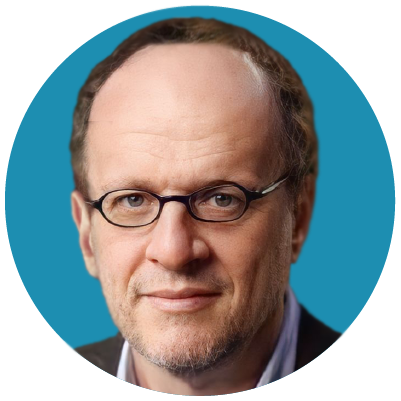
José Soares de Andrade Júnior
Federal University of Ceará (UFC), Brazil
Expert in statistical physics, complex systems, and transport phenomena.
José Soares de Andrade Júnior
Federal University of Ceará (UFC), Brazil
Prof. José Soares de Andrade Júnior is Full Professor in the Department of Physics at the Federal University of Ceará (UFC), where he is also a member of the Graduate Program in Physics, one of Brazil’s leading research programs in the field. He is a CNPq Research Productivity Fellow (Level 1A) and a permanent member of the Brazilian Academy of Sciences. He also served as Vice President for International Affairs at UFC between 2017 and 2019. Prof. Andrade earned his degree in Chemical Engineering from the Federal University of Pernambuco in 1984, followed by M.Sc. and Ph.D. degrees in the same field from the Federal University of Rio de Janeiro. He carried out postdoctoral research at the École Supérieure de Physique et de Chimie Industrielles de la Ville de Paris (France) and at the Institut für Baustoffe in Switzerland, strengthening his interdisciplinary expertise in complex systems and transport phenomena. Internationally recognized for his contributions to statistical physics and complex systems, Prof. Andrade’s research spans a broad range of topics including transport phenomena in disordered media, porous materials, percolation, complex networks, anomalous diffusion, socio-economic systems, and fluid transport in irregular geometries. His work combines theoretical physics, computational modeling, and data-driven approaches to investigate emergent phenomena in natural and engineered systems. Throughout his career, he has supervised a large number of doctoral and master’s theses covering subjects such as multiphase transport in porous media, scaling laws in complex networks, explosive percolation, fracture dynamics, anomalous diffusion, and transport in physiological and geological systems. His interdisciplinary research has significantly contributed to bridging physics, engineering, geosciences, and computational social science. Prof. Andrade is also Director of the Center for Artificial Intelligence Reference (CRIA) and serves as Chief Data Scientist for the State of Ceará, contributing to the advancement of artificial intelligence and complex systems applications in science and public policy. His scientific leadership and highly cited contributions have established him as one of the leading Brazilian researchers in statistical and computational physics.
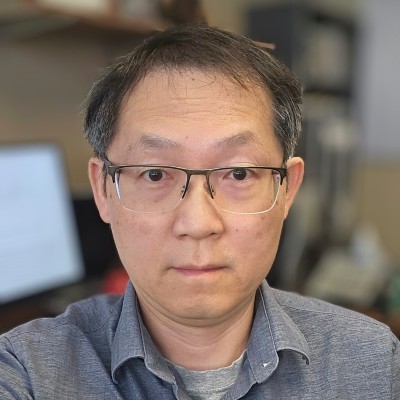
Taehun Lee
City College of New York (CCNY), USA
Expert in CFD, multiphase flows, and advanced lattice Boltzmann methods.
Taehun Lee
City College of New York (CCNY), USA
Prof. Taehun Lee is Associate Professor in the Department of Mechanical Engineering at the City College of New York and Core Faculty member of the CUNY Energy Institute. He is internationally recognized for his contributions to computational fluid dynamics, multiphase flow modeling, and the development of advanced lattice Boltzmann methods for complex interfacial transport phenomena. He earned his B.S. and M.S. degrees in Mechanical Engineering from Seoul National University in 1996 and 1998, respectively, and completed his Ph.D. in Mechanical Engineering at the University of Iowa in 2004. Prior to joining CCNY, he held research positions at the University of Iowa and at the Argonne National Laboratory, where he continues to collaborate as Guest Faculty in the Mathematics and Computer Science Division. Prof. Lee’s research focuses on high-fidelity numerical methods for multiphase and multicomponent flows, including phase-field and conservative lattice Boltzmann formulations, adaptive mesh refinement techniques, and high-order spectral-element methods. His work has significantly advanced the simulation of interfacial dynamics, boiling phenomena, droplet impact, wetting transitions, bubble-droplet interactions, and heat and mass transfer in complex fluid systems. A major theme of his research is the development of robust and mass-conserving lattice Boltzmann frameworks capable of accurately resolving fluid-fluid interfaces, surface tension effects, and thermodynamic phase transitions in challenging multiphase environments. His studies encompass applications ranging from energy systems and thermal transport to microfluidics and soft matter physics. Prof. Lee has authored numerous influential peer-reviewed publications in leading journals such as Physical Review E, Journal of Computational Physics, Physics of Fluids, Computers & Fluids, and Soft Matter. His interdisciplinary contributions continue to shape the advancement of lattice Boltzmann methodologies and computational multiphase flow research worldwide.
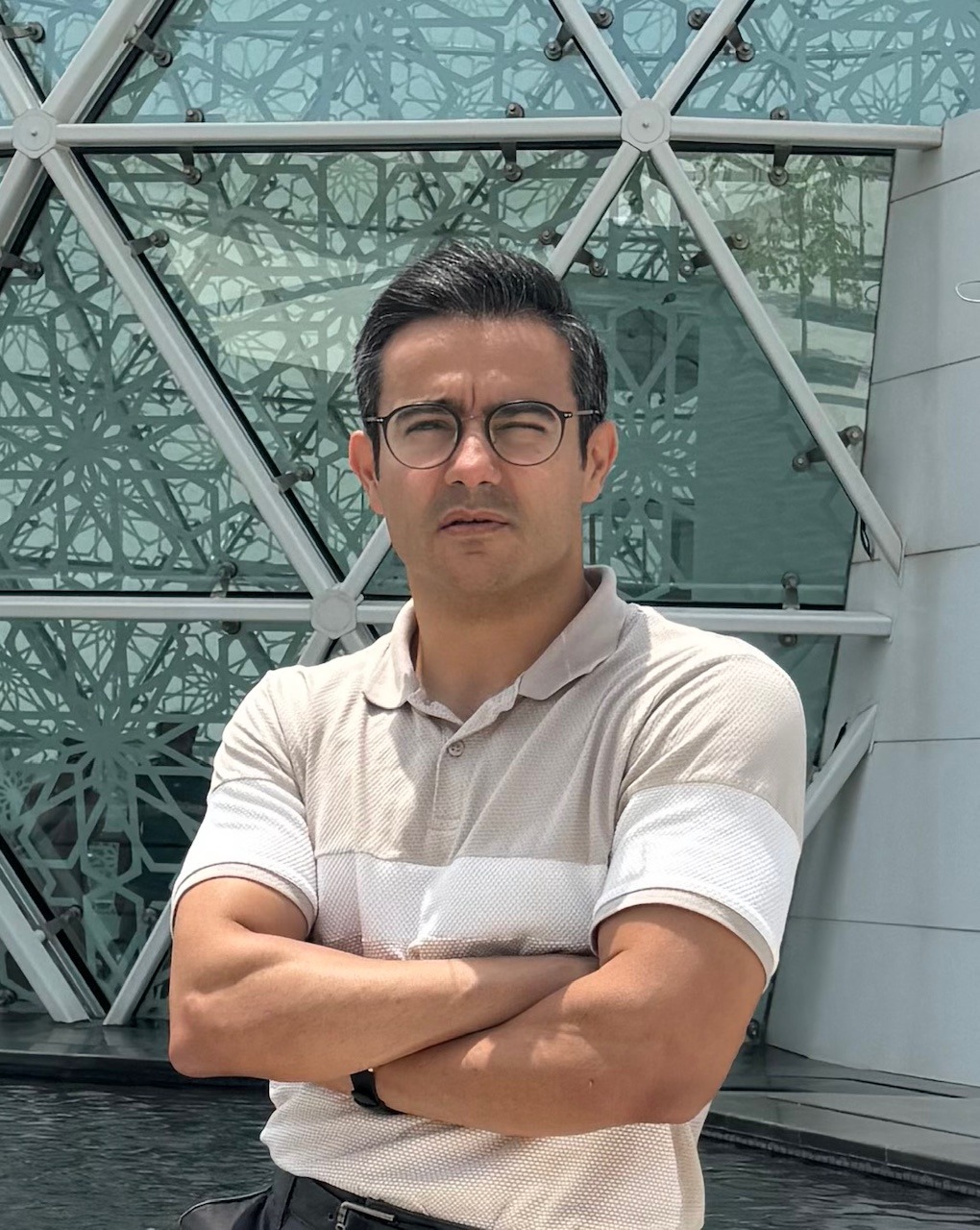
Seyed Ali Hosseini
ETH Zürich
Senior scientist in CFD, combustion and quantum computing.
Seyed Ali Hosseini
ETH Zürich
He is a Senior Scientist at ETH Zürich, working across a broad spectrum of topics ranging from fundamental mathematical developments to advanced engineering applications. His research includes discrete velocity kinetic models, with emphasis on the newly introduced concept of asymptotic freedom, as well as the modeling of non-ideal fluids in dense regimes and highly compressible flows. He has strong expertise in combustion simulation, having developed solvers for low-Mach number combustion that have been successfully applied to complex and realistic configurations such as the PRECCINSTA burner and combustion in porous media. His work also encompasses medical flow modeling, with particular focus on cerebral aneurysms and thrombosis kinematics, as well as the application of neural networks to simulations involving complex chemistry, aiming to reduce computational cost or enable reduced kinetic models. Additionally, he is active in quantum computing applied to CFD, focusing on the development of quantum algorithms for numerical simulation. His core competencies include fluid mechanics and thermodynamics, numerical methods for partial differential equations (PDEs), atomistic simulations, statistical and quantum mechanics, and high-performance computing (HPC). He aims to contribute to scientific advancement and innovation in energy and engineering, while fostering interdisciplinary collaboration between natural sciences and engineering.
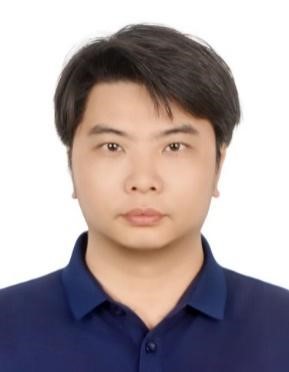
Xuhui Li
Harbin Engineering University, China
Expert in CFD, lattice Boltzmann method, and GPU parallel computing.
Xuhui Li
Harbin Engineering University, China
Xuhui Li obtained his PhD from Kyushu University, Japan, in 2016. His doctoral research focused on GPU-accelerated lattice Boltzmann methods for complex free surface flows. His oral presentation on multi-GPU parallel computation received the Solid-state Drive Prize at DSFD2016. From November 2016 to October 2017, he conducted postdoctoral research at the Hydrodynamics Institute of École Centrale de Nantes, France, working on GPU porting of an adaptive mesh refinement (AMR) high-order finite volume solver (WCCH). From December 2017 to June 2020, he worked as a principal outstanding postdoctoral fellow under Prof. Xiaowen Shan at the Southern University of Science and Technology, China, focusing on high-order regularized lattice Boltzmann models. In 2020, he became an associate professor at Harbin Engineering University. His main research interests include computational fluid dynamics (CFD), covering the lattice Boltzmann method, finite volume method, and large-scale GPU parallel computing, with applications in wall turbulence, wakes, multiphase flows, and free surface flows.
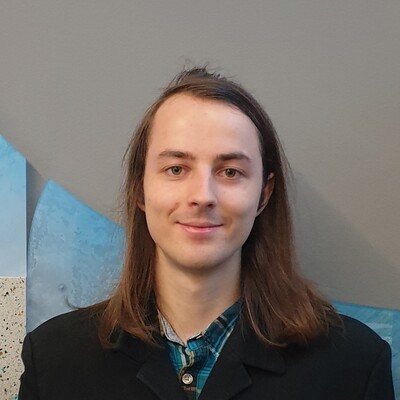
Moritz Lehmann
Intel & OpenCL Advisory Panel, Germany
Expert in GPU high-performance computing and lattice Boltzmann methods.
Moritz Lehmann
Intel & OpenCL Advisory Panel, Germany
Dr. Moritz Lehmann will be one of the invited speakers at the DSFD 2026 Conference. Recognized as one of the world’s leading experts in GPU high-performance computing (HPC) using OpenCL/C++, Dr. Lehmann is the creator of FluidX3D, one of the fastest and most memory-efficient lattice Boltzmann CFD software frameworks available today. Developed in OpenCL, FluidX3D delivers performance levels up to two to three orders of magnitude higher than major commercial CFD solvers on equivalent hardware, while maintaining compatibility with a wide range of GPU and CPU architectures released since approximately 2009. Through its open-source availability, the project has become an important contribution to the accessibility and advancement of high-performance computational fluid dynamics. Dr. Lehmann earned his degrees in Physics from the University of Bayreuth, completing his Bachelor’s degree at the age of 21, his Master’s degree at 22, and his PhD at 25 with summa cum laude distinction. He also specialized in Biological Physics through the Elite Network of Bavaria and conducted research activities at the German Aerospace Center (DLR). Currently, Dr. Lehmann serves as a member of the OpenCL Advisory Panel, contributing to the future development of the OpenCL language standard in collaboration with the Khronos Group. In addition, he works professionally at Intel. His research and development activities focus on GPU computing, lattice Boltzmann methods, numerical optimization, and high-performance scientific software, making his participation highly relevant to the DSFD 2026 community.
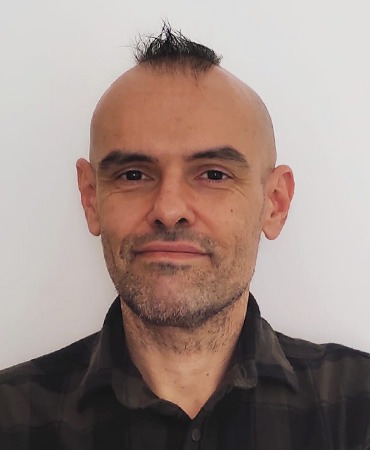
Adriano Tiribocchi
Institute for Applied Mathematics “Mauro Picone” (IAC-CNR), Italy
Expert in active matter, complex fluids, and lattice Boltzmann methods.
Adriano Tiribocchi
Institute for Applied Mathematics “Mauro Picone” (IAC-CNR), Italy
Dr. Adriano Tiribocchi will be one of the invited speakers at the DSFD 2026 Conference. He is a Senior Researcher at the Institute for Applied Mathematics “Mauro Picone” of the Italian National Research Council (IAC-CNR), in Rome, Italy, where his research focuses on computational physics, soft matter, active matter, and lattice Boltzmann modeling. Dr. Tiribocchi is internationally recognized for his contributions to the numerical and theoretical investigation of complex fluids and active matter systems. His research combines advanced computational methods, hydrodynamic modeling, and high-performance computing to study phenomena involving active emulsions, liquid crystals, multiphase flows, self-propelled particles, and non-equilibrium statistical physics. Throughout his career, he has contributed to several influential studies in the fields of soft matter physics and computational fluid dynamics, with publications covering topics such as motility-induced phase separation, active Brownian particles, hydrodynamic effects in active systems, and mesoscale numerical modeling. His work has played an important role in advancing the understanding of emergent phenomena in active and complex fluids. In addition to his theoretical contributions, Dr. Tiribocchi has developed computational approaches for microscale and mesoscale simulations, including applications involving dielectrophoretic assembly processes and particle-based materials modeling. His expertise in lattice Boltzmann methods, active matter, and high-performance computational physics makes his participation highly relevant to the DSFD 2026 scientific community.
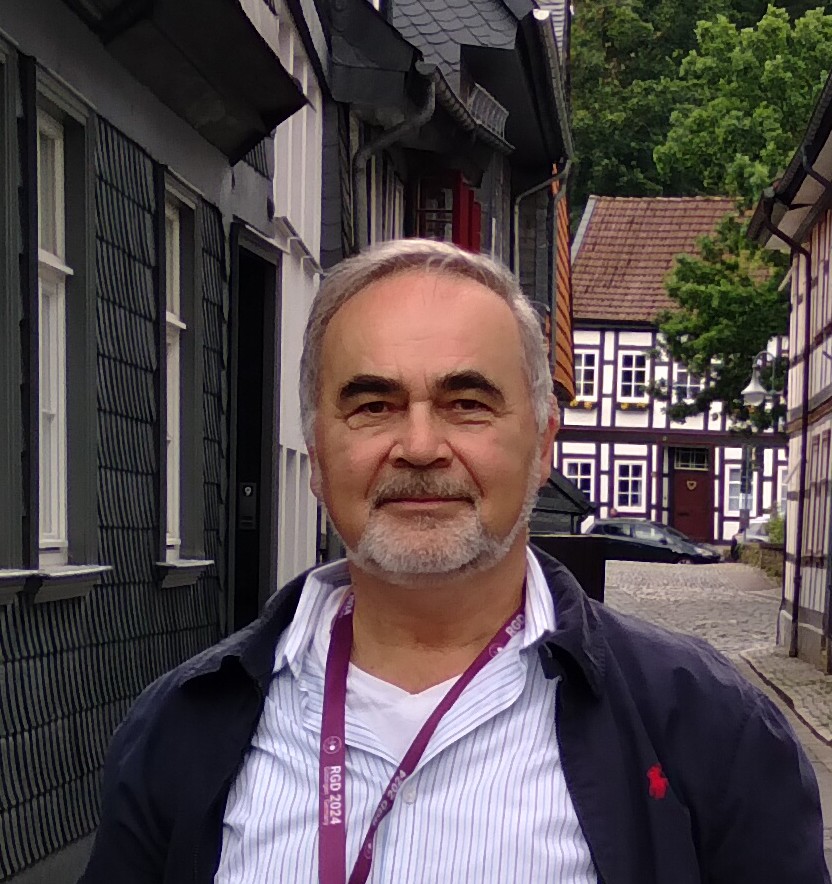
Felix Sharipov
Federal University of Paraná, Brazil
Expert in rarefied gas dynamics and numerical and analytical methods.
Felix Sharipov
Federal University of Paraná, Brazil
Prof. Felix Sharipov studied at the Moscow University of Physics and Technology, Faculty of Aerophysics and Space Research. He obtained his Ph.D. at the Ural State Technical University in Russia. In 1988, he joined the Physics Faculty of the Ural State University where he set up his activity in rarefied gas dynamics. In 1992, he moved to the Federal University of Parana in Brazil where he is currently Full Professor at the Physics Department. At this department, he built up a group on modelling of gas flows in microscale. His research interests are numerical and analytical methods of rarefied gas dynamics with applications to transport phenomena, microfluidics, vacuum technology, aerothermodynamics etc. His group develops both probabilistic and deterministic approaches. The former represents the Monte Carlo methods, while the latter is based on the kinetic Boltzmann equation. Professor Felix Sharipov published more than 160 papers in peer-reviewed journals, two books and several chapters for handbooks. He was a guest editor of several special issues in “Vacuum” and currently he is a member of Editorial Board of this journal.